1 month after surgery
.
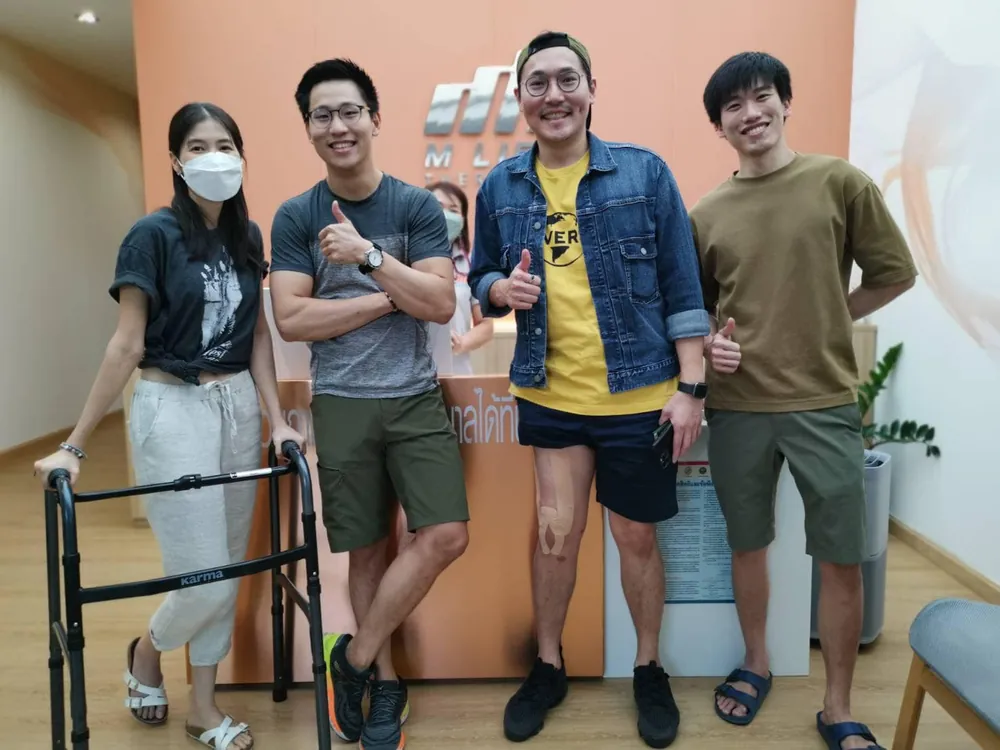
The 4th of June marked my 1 month after the locked knee surgery removal. So I decided to come and see K’ Ken at M Life Physiotherapy clinic MLife Therapy Clinic คลินิกกายภาพบำบัด They started by flipping the knee to check the Range of Motion (ROM) which as I read and asked many experts, they said the most important thing after ACL Reconstruction are Knee Extension and Knee Flexion. Though it sounds like a simple thing, but for people with ACL Reconstruction, those 2 moves were very painful. Personally, I’ve been practicing stretching my knees and was able to do it 2 weeks after the surgery. However, for the knee flexion, it was very painful, I felt that my knees weren’t the same at all and I also experienced muscle atrophy. (According to Ken’s explanation, once the surgery occurred, our body didn’t want me to use the knees, causing the muscles to be contracted out of the fear of hurting. But we can stimulate the muscles to their normal state in 1-2 months.)
.
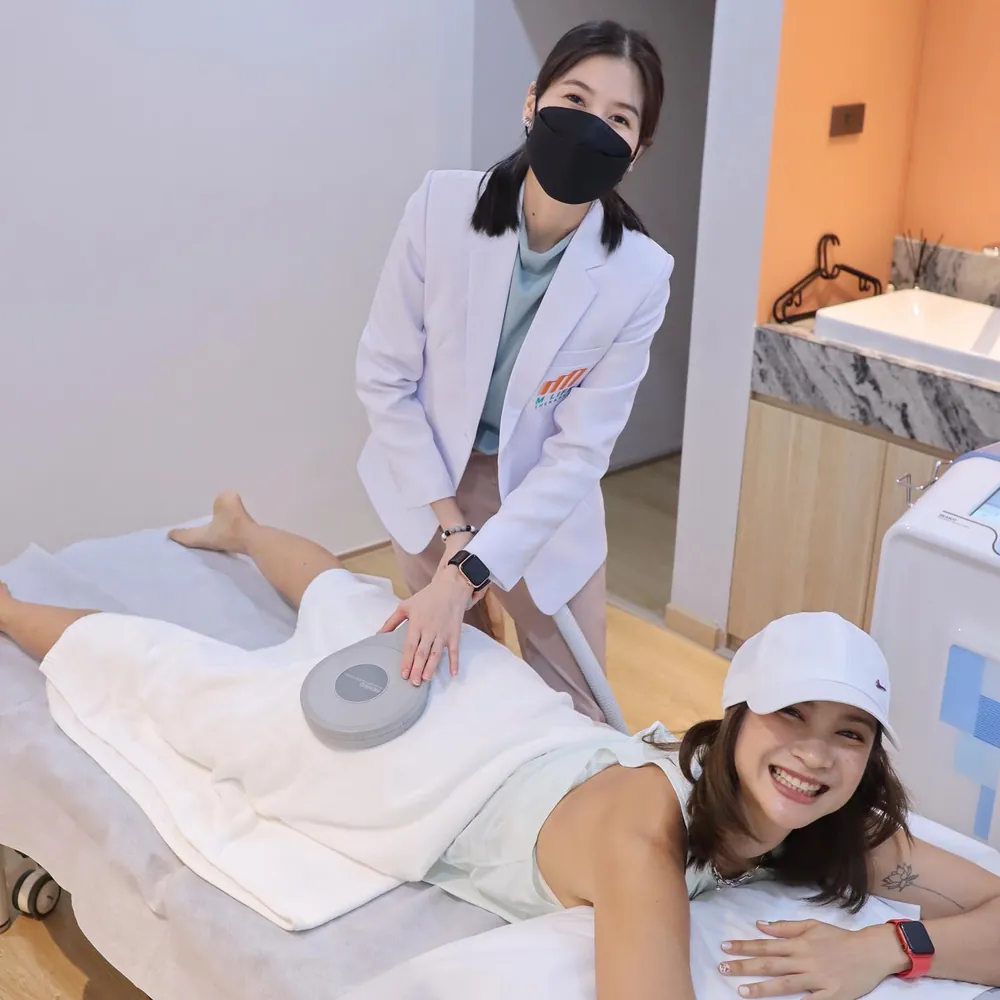
🚨After checking the ROM, the laser is used to stimulate certain muscles around the knee area to improve blood flow, which according to what I’ve learned, by increasing blood flow helps stimulate our body to bring nutrients to repair the damaged part. The surprising part was, however, the fact that after doing the laser, my knee bending angle has unbelievably improved. When the hamstring is supported, the knee could bend almost as much as the left side which was not under surgery. Ken told me he’d prepare the Baseline Test for the recovery program in this 1-2 months in order to make my knee fully function as it used to be before the surgery. After we finished the consultation, he put the Kinesio Tape to lock my Quad muscles and around Patella, then we went ahead to do the Baseline Test.
.
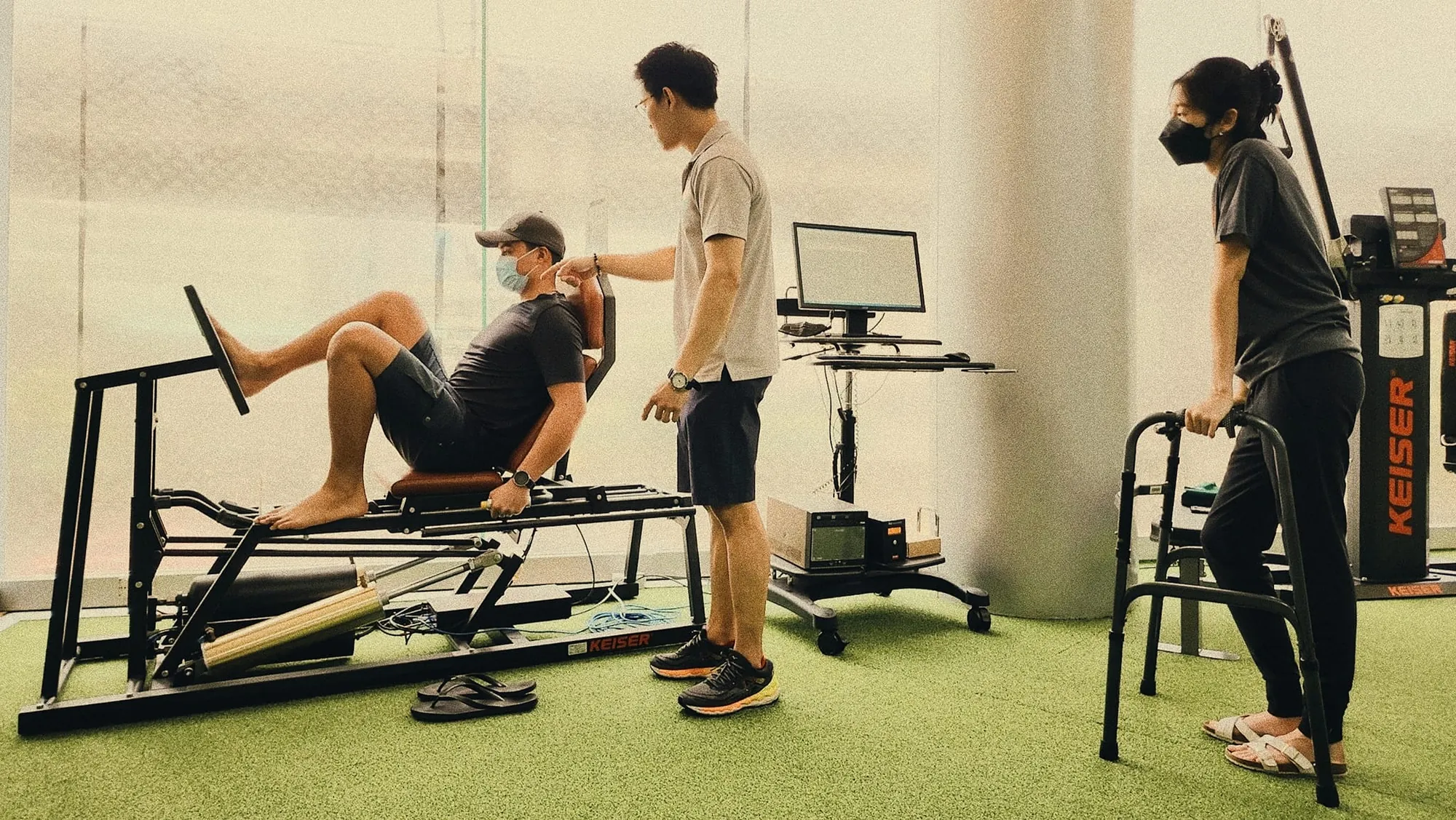
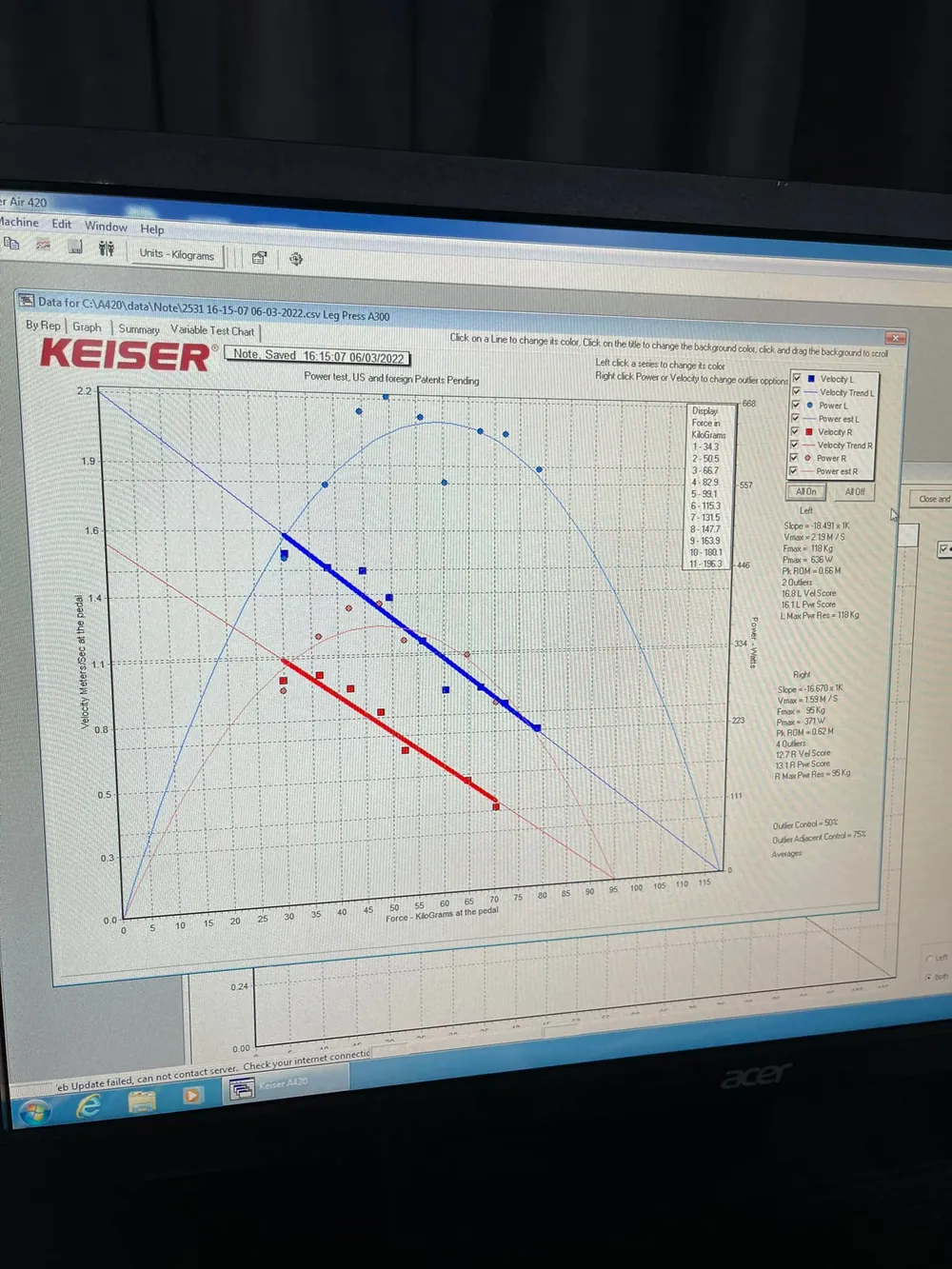
🏃🏻 Before the test began, I had to run (better called walked) on the machine for 10 minutes to warm up the muscles. After Ken finished setting up the machine, he explained the testing process, which would use Seated Leg Pressed at a 90-degree knee angle. I must push kick the machine with both legs at the same time from lightweight to Normal Limit, which is twice the body weight. (I weigh 86 kgs, so 2 times would be around 172 kgs.). In the beginning, the light weight didn’t feel anything, until the adjustment reached the normal limit. I could do it until 180 kgs. When I was about to stand up and put on my shoes, Ken told me this was just to find Max Limit for testing (only 10 times of kicking, I sweat throughout my whole body). And I had to do 1 more set to collect the data.
.
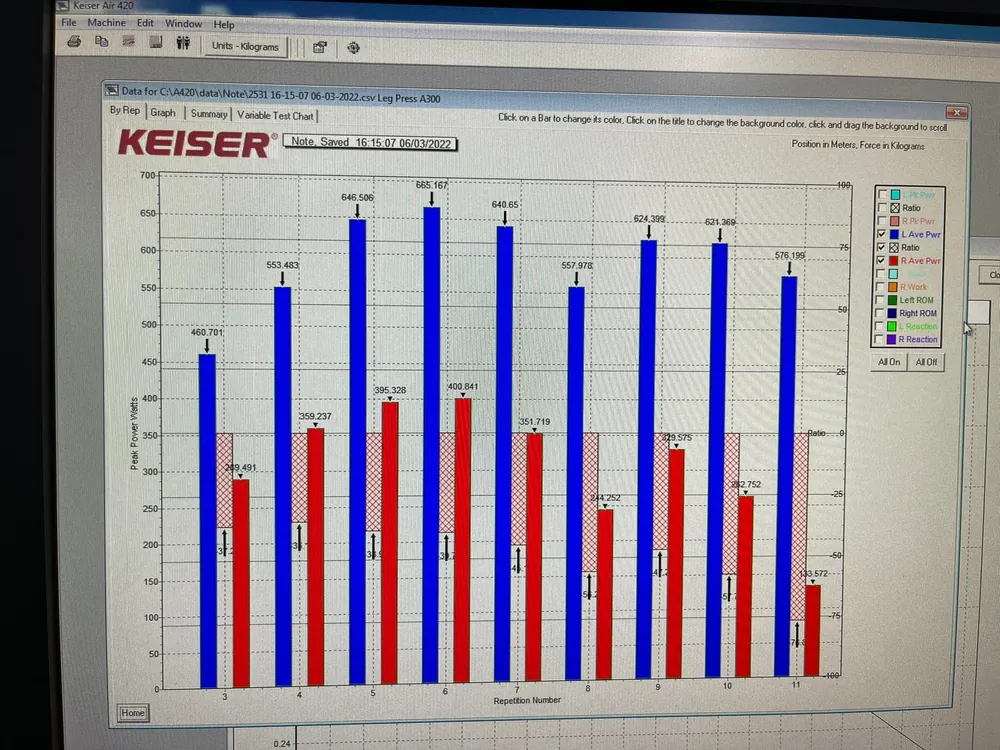
💪🏻 This time when the real test began, the main key elements to collect consisted of 3 parts; speed, strength, and explosive force. These elements are the key to making both of my legs back to normal. We started with the light weight and gradually increase by 10% of the weight. (From the video clip, those were the last 2 times that were the new Max Limit at 196 kgs). The results have shown that my right leg kicked about 0.6 seconds faster than the left. And the left has about 75% more power compared with the right, and most importantly, my left leg's explosive force was almost instantaneous. The right leg, however, seems like it had to charge the energy which took an insane amount of time before it can exert maximum energy.
.
👉In conclusion The result from the Baseline Test was much better than expected. But there was still pain around the surgery area. So I’d have to do whatever it takes to make my knees fully function without experiencing the pain, especially avoiding activities that cause my knees too much pressure. Such as kneeling or sitting cross-legged until the wound and muscles returned back to normal. In general, the knees should not be moved sideways, only forwards and backward. Swimming is allowed. Eat lots of Ramen for the collagen (Ken said I’d love this advice), along with Vitamin C, D, and calcium. By increasing ROM to the full degree, and increasing muscle and speed, I’ll be able to do the boulder in 2 months.
#Financial with Karuesit
#Physiotherapy with Karuesit
9.5 weeks after surgery
.
🏃🏻 After passing running forward and backward, today we focused on Lateral movement, agility, and strength which promotes the proper use of the knee and prevents future injuries.
.
💪🏻The training starts with Resistance Running. I put on a heavy belt while Ken pulled it to check if my hamstring was still hurting because part of the hamstring was used to hold the artificial ligaments in place. I passed all the tests whether forward, backward run, or Plyometric jumps which were jumping forwards, alternating left and right jumps at an uneven distance to improve my understanding of how to control the knees. I passed this test too and am now ready for Lateral Exercise.
.
✅ One of the main reasons for people having injuries are from moving the knees in different direction with the toes. By adjusting the motion when using the knee to coordinate with the foot after surgery was considered more difficult, but once I started to grasp the idea, I learned that I’ve been moving in the wrong motion since the beginning and I need to get used to this new correct motion.
.
🤼 After getting used to the preliminary training, Ken did the Shadowing Movement with me. The main point of this was to increase the strength and speed of my injured knee. Most importantly, it had to be trained on bare feet during the whole training to make it fully function before going back to wearing exercise shoes. It was a very tough session for me because my right knee is somewhat more delayed than the left knee. The flow of movement was not as fast as it used to be.
.
#Financial with Karuesit
#Physiotherapy with Karuesit